Blog

  • Discovering Another Way

    Discovering Another Way

    I paid $25 to park. There I said it. $25 to park may not shock anyone in NYC or LA. But in Nashville, and especially on a Thursday night, $25 is robbery. I dropped my family off at a restaurant and drove off in search of a place to rest my minivan. I pulled into the most convenient lot, parked my car, and walked over to the ticket machine. My jaw fell open. $25.

    Turns out the parking company had concealed the price until drivers proceeded to pay for their ticket.

    I briefly considered my options: Search the city in the haystack of parking meter spots or look for another parking garage.

    Here’s the thing: I assumed the lot across the street would be comparable in price. If the Shell station on one side of an intersection advertises gas for $2.46 a gallon, the Exxon across the street sells for $2.45, right?

    Common business sense.

    When I walked back to my car following dinner, however, I noticed the adjacent parking lot’s sign: $6 All Day.

    My assumption cost me $19 and some shame. The judgement I made, based on my common sense, turned out to be foolish. It never occurred to me there might be another way.

    There might be another way.

    This is the theme for all of our lives. Each of us has a way of doing life and relationship. To our own awareness, our way makes sense. It is woven into the fabric of our being and often is the result of tiny, seemingly insignificant messages which turn out to be toxic. Unless uncovered, what may have protected us in one moment kills us for the rest of our lives.

    Intimacy is to be feared. Women are dangerous. Men only want power. Authority cannot be trusted. Sexuality is shameful. Family will always manipulate.

    Our future paths are cut and paved from these small, neatly packaged self-protective pledges. In our subtle agreements with our truths, we determine the emotion associated with our experience is one to avoid. Fear and shame are popular culprits. We attempt to avoid these and accompanying emotions like they are laced with a virus. Practice makes perfect: Our belief and actions become habit.

    In fact, our way becomes so ingrained, we do not realize we recreate the same circumstances over and over again. Let me say that again: We habitually recreate the same world around us. We start a new job in a completely different field and then realize it feels like our old one. We remarry after a divorce and discover past issues follow us into our new marriage. We move to another city and attempt to start over. But we always find ourselves in the same story with different characters. We rarely conclude the common denominator might be us.

    After discovering her “way”, built from a life saturated in avoidance of fear, a woman told me, “I decided I simply need to do whatever it is I definitely do not want to do in every situation.” She began to chart a new course and write a new story.

    When we do not become aware of our way, and we do not consider another one exists, we overpay on life when parking across the street is $6 all day.

    Process:
    What messages about life and relationships have you assumed to be true?
    How do you apply them to relationships today?
    What might it cost you to try a different way?
    What will it cost you if you do not?

  • Dealing with Addiction

    Dealing with Addiction

    Whether we like it or not, whether we want to admit it or not; if we are alive, we are dealing with addiction. It touches all of our lives.

    Everybody falls into at least one of three categories (usually two). We are either
    1) in active addition,
    2) recovering from addiction, or
    3) love somebody who is.

    In active addiction, a person attaches to a substance, behavior, or process and progressively becomes a slave to it. The addiction persists, despite its negative consequences, and leads to a place where we can’t control ourselves—a place of powerlessness. Even if an addict wants to quit, most people find they can’t do it on their own.

    People can become addicted to more destructive vices like alcohol, drugs, gambling or sex. Or it could be an addiction to television, gaming, or shopping. Some of the more socially acceptable addictions are to anxiety, sugar, or religion.

    Addiction becomes a problem because it works—for a while at least. Our vices provide us with a sense of wellbeing while giving relief from the struggles, loneliness, shame, and disappointments of life. But at the core of every addiction is a refusal to be present. We want life to satisfy us, but it doesn’t—it can’t. Instead of giving our hearts a voice, we look for a rescue in the forms of manufactured comfort, control, and power. Our addictions reveal our demand that life work for us now.

    There is much reason for hope.

    Slavery to addiction is not the end of the story. The spiritual paradox of recovery from addiction is that admission and surrender to powerlessness over an addiction often leads to a fuller life. For any one to admit his or her struggle as an addict takes courage. It is far easier to remain in denial and practice hopelessness. It takes even more courage to seek help—but help is there.

    Process:
    From what unhealthy attachments to substances, behaviors, and/or process are you ready to seek help?

  • Trust Me

    Trust Me

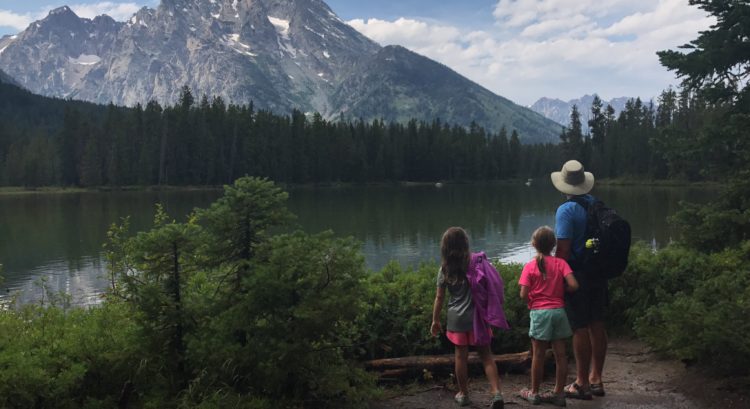
    My family recently returned from an epic trip: in two weeks, we drove 3,000 miles. From Denver, we left the populated and polluted city-life behind in search of the wide open spaces the Dixie Chicks told us about.

    First stop, Yellowstone with its geysers and hot springs and animals. Then south to explore and gaze at the Teton range before heading back to the Rocky Mountains and a jaunt over to Moab, Utah.

    On the forefront of the trip, it could be argued that my wife and I lacked common sense. 3,000 miles might be doable for adults. But to expect a couple elementary schoolers to kick back, relax, and enjoy the scenery might be a little much.

    It gets worse: To see what wanted, we knew we would have to wake up early and stay up late. I love wildlife, and my wife loves photography. The wildlife worth hunting (ok, seeking) like wolves and grizzlies come out to play early to avoid the July heat. And my wife wanted to shoot (ok, photograph) the animals and mountains at dawn, just as the sun climbed over the horizon. This meant setting the alarm clock for 4:15, 4:45, and 5:20 AM on a regular basis.

    I might rather wake a hibernating bear than two exhausted and sleeping kids.

    Or so I thought.

    Turns out, the girls did great. Morning after morning, we disrupted their slumber to get them into the car while the stars still owned the sky. Sometimes I would pick the girls up, wrap a blanket around them, grab their stuffed animals, and set them in the car. Other mornings they walked out into the cold, mountain air with wide and anticipating eyes.

    This isn’t normal, by the way. When school starts, at least one of them if not both will resist our early morning wake up call. They’ll lay in bed until we flip their mattresses. That was my expectation for this trip. Instead, they did what we asked and followed our lead. At the end of the trip, it finally hit me:

    Our kids trusted our intentions. While they did not know what we would see or experience in the coming day, they believed our hearts wanted to bless them. They trusted we had something good in store, and with that belief, they willingly allowed us to wake them up before 5 AM and before the temperature rose above 45 degrees (despite the fact that we dressed them for the beach, not the mountains).

    The girls trusted our hearts. They anticipated our plans as good. And thankfully, our hopes for adventure and close encounters became a reality. We watched in awe as a coyote ran alongside the road, stopped to flip a mouse into its mouth, and went on with the morning. We watched a grizzly bear roam a field twenty-five yards off the road- feeling safer near the cars of tourists than the male grizzly who threatened her cubs. We looked into our rearview mirror as bison walked two feet from our car. We hiked to water falls, jumped from rock to rock in a river stream, and climbed through red rock arches taller than buildings.

    As the trip unfolded, our girls found more and more reasons to believe in our vision and care for the day ahead.

    In the scenery of our own heart, trust does not always come so easily.

    Our lives are full of relationships where trust has eroded.

    I am reminded of the 23rd Psalm, “The Lord is my shepherd. I shall not want”. Such a prayer is often glanced over and recited and sung and generally taken for granted without honest attentiveness to the life-saving trust a sheep might have in his shepherd.

    Do I trust well?

    The question of trust becomes a crucial turning point in all of our stories. At some point, we all learned or decided or tricked ourselves into the same answer: No. Do I believe Mom and Dad have something good in store for me? Do I believe God has my best in mind as he scripts and/or allows my life to unfold? Do I think my neighbor or professor or tennis coach or boss or spouse thinks well enough about me to act with selfless intentions?

    Deeper relationship hinges upon our ability and willingness to open ourselves to trust again. To allow our heart the strength to believe another has our best intentions in mind…this would bring the world from black and white into color.

    One thing can be said for certain: Our assumptions about the heart of others toward us originate back somewhere in the hovering mist that is the past. A story or two lingers back through that fog. One day we decided we weren’t enough or, the world, most likely interpreted through those closest to us, was out to get us; our world no longer acted with our best in mind.

    We wandered off to find and create our own safety.

    Like sheep we have gone astray. Sheep lose their path; they lose the way. And most certainly trust has something to do with it. The moment a sheep takes a step away from its shepherd, its either too foolish or greedy or ignorant to keep trust. It makes its decision, and trust is lost, and so it becomes lost as well. That sheep will not find its way home until trust is restored.

    Yes, the shepherd comes looking for his sheep. But we sheep who have minds and hearts must open up and examine how we have learned to trust and not to trust before we can follow the shepherd back home.

    To find our way home in relationships, our trust begs our attention.

    Process:

    Take inventory of or even journal about the most important relationships in your world. It takes time to practice and develop awareness to the voices of our heart. Perhaps this process space will allow you to create a new category to pay attention as you interact with others.

    What is your level of trust with your spouse/significant other? With your employer? With your kids? With your parents? With your friends? With the teenager who bags your groceries? With the police officer you pass on the highway? With God, or even the idea of God?

    Every shifting and movement in our heart has a story, and the stories wait for our exploration when we are ready. “When we are ready” being the key phrase there. Stay present to the feelings related to trust in your world, and over time, the stories will surface with plenty to say. I promise.

    One more thing…By using our vacation as an example, I do not mean to imply the trip was a fairy tale. Parts of it were- we laughed and gazed and basked in the beauty around us and currently wish we could hop back on a plane to Jackson Hole. But there were plenty of hard moments. Whatever trust existed between us came hard-earned through the willingness to struggle together. And for those graceful moments when a moose ventured out from the brush to drink from the Snake River as our raft floated by, whatever we had to process through to get to that moment became worth it.

  • Will You Stay in Your Story?

    Will You Stay in Your Story?

    Our story is one of desire, ache, and hope. It is our story because it is the story. At least in the chapters this side of heaven. The greater themes are laid out for us; there is a blueprint. As my friends at Sage Hill say, “Life is Tragic, God is faithful.”

    In The Allure of Hope, Jan Meyers-Proett suggests the idea of staying in our story. When we stay in our story, we stay in the story. In moments when we would rather be someone or somewhere else, God whispers, Will you stay in your story?

    Desire begins our story. It is not that we have desire. We are desire. Early in our life, we do not learn what to want. We just want. Love. Food. Attention. Touch. Later on, circumstances help us determine what more we want. To be married. A new job. To be cancer free. For a son to stay out of trouble. But what we desire rarely come easily. The things we deeply covet require help outside of our control and wrestling with the One who holds the power. The dreams and hopes we long for, the things which brings us great joy, depend on God coming through for us and/or extensive hard work on our part. The AA attendee knows this. His motto is “one day at a time”. To stay sober he must stay in his story in each moment. The glass of bourbon is his ticket out.

    So the question becomes, what does it take to stay in your story? Not a story. Your story. In theory I love the idea. In practice, I do not. Desire leads us to our ache. I try to escape my story often. Even as I sit down to write, I fight the temptation to drown myself in the writings of others. I am tempted to read blogs or books on my book shelf. It would be my own literary whiskey lullaby. I want to escape what God has given me to write. I sabotage my own creative process with the success of others. To bask in the glory of others distracts from the work I am made to do.

    The deeper question my heart asks is this: Is the story God has given me good enough? This has two levels. There is the story I sit down to write and the story I wake up to live. Like the alcoholic who cannot stay sober, I often run from the sobriety of producing my own content. To be sober is to live with desire and invite the ache which follows. Or as my friend says, sober translates, “Son Of a B-, Everything is Real”.

    Suicide is the ultimate attempt to exit our story. But there are lesser ways. There is a vanity fair of options. Fantasy. Boredom. Success. Safety. Shame. Control. To purchase a ticket at any of these booths numbs our desire and lessons the ache. It is to look for relief rather than reality. In these terms, an afternoon of golf may be just as damaging as an hour at a strip club. We will not be aware of our inner work to be done until we are aware of our ache.

    The real question we must ask is this: Can God meet me in my ache? Is God kind enough to care about my pain? If not, I must take matters into my own hands to provide the satisfaction my heart demands. My friend and colleague Jennifer wrote a blog post in which she used the adjective “gentle” to describe God. Those two words together halted my reading. Gentle God. The majority of the people I hear from cannot describe God as gentle. After all, the way we treat our own heart often reveals our picture of how we expect God to handle us.

    But if I can envision God to be gentle, if I believe He can meet me in my ache, perhaps I can stay in my story to live with hope. The goal is always hope.

    My wife and I just finished a Hobbit marathon. Up unit this week, neither of us had seen the first two installments of Peter Jackson’s latest tales in the Middle Earth saga. There is a moment near the beginning of An Unexpected Journey when Bilbo wakes up to an empty house. The previous night, he was frighteningly and graciously visited by thirteen dwarves and the wizard, Gandalf. The unannounced visitors ransacked his cupboards, caroused deep into the early morning, and planned their harrowing and ambitious strategy to take back their homeland from the fire-breathing dragon, Smaug. And Bilbo is invited. In this moment, it is not only his evening which has been interrupted; It is his life. Bilbo declines the invitation.

    The next morning he awakens to a clean, abandoned house and realizes he has been left to live his story as if the dwarves and wizard had never visited. But the hopes and possibilities of the night before have become his story. To stay in his story he must chase after the band. He launches himself off his front porch to hunt a story in which he now belongs. Behind him on the steps sit three enemies of his heart: control, predictability, and comfort.

    If the pattern and path of your life do not reflect the deeper blue print of the larger story: desire, ache, and hope, you are likely finding ways out of your story. To live the story is the invitation to desire, to feel our ache, and to hope. For the woman who longs to be married, it is to desire a husband, to feel the loneliness of singleness, and to wrestle God with her hope. For the parent whose daughter sits bald in the cancer clinic, it is to ask “why?” with tears and anger and sadness, and to find acceptance is not an avoidance but rather an all cried-out trust. For the dreamer, it is to cling to aspiration despite repeated failure with a willingness to continue to work.

    We enter the room of hope after, not before, passing through the doorways of desire and ache.

    This week I learned to stay in my story from the most unlikely of people. A friend has a son with a congenital heart defect. At seven days old, Max underwent surgery and thus began a life with a pacemaker and regular check-ups. Max’s first couple years of hospital visits were filled with thrashing and flailing on the cold table as the doctor attempted to check the pacemaker and heart readings. Not anymore. Now three years old, the little guy jumps up and lays perfectly still as the doctor performs the necessary procedures.

    I want to learn from Max. He is accepting the story God has given him to bear. He used to fight his parents and doctors. Now he lays himself without resistance onto the examiner’s table. His arms and legs lay still as the metal instruments touch his chest. His limbs rest as his heart beats with trust. Max is learning to stay in his story. When it comes to role models, he is one to follow.

  • Can I Get a Witness?

    Can I Get a Witness?

    After six years and many miles on my first, I just bought a second pair of Chaco sandals. If you know Chaco sandals, you are already nodding your head in approval. In you don’t know about them, think open-toed sport sandal as durable as a tank with the comfort and support to walk across Europe without even thinking of your feet.

    There is one downside to them: Chacos tend to come with an exceptionally long strap that, when tightened, ends up dragging the ground as if your sandals have a tail.

    Thanks to a tip from a shoe guy, I took my new sandals to a seamstress who cut and sewed the straps on each shoe to a likable length.

    Aren’t you happy for me?

    Actually, I don’t expect you to care. And that is precisely why I write.

    But one person does care about my humble little sandal victory: my wife.

    No, she is not turning somersaults or popping champagne. She probably hasn’t even thought about it since I first shared. But when I did tell her, she listened and smiled. She might have even mustered up a “that’s great.” She only cared because I cared, but for me that was enough.

    In the movie “Shall We Dance,” Beverly Clark shares her thoughts on why people get married,

    “We need a witness to our lives. There’s a billion people on the planet…I mean, what does any one life really mean? But in a marriage, you’re promising to care about everything. The good things, the bad things, the terrible things, the mundane things…all of it, all of the time, every day. You’re saying ‘Your life will not go unnoticed because I will notice it. Your life will not go un-witnessed because I will be your witness.’”

    Scripture says it another way,

    “It is not good for man to be alone…”

    Whether you are married or not, the longing to have someone else validate your existence resides deep within you. Are you aware of this ache in your heart? It’s called loneliness. And it’s a good and terrible thing. It can be the most excruciating of emotions, to feel the reality of isolation. It can also be the catalyst which incites you to admit your heart needs a witness to its existence. When you do this, you accept loneliness as a God-given gift. While it hurts much more than a string around a finger, it serves the same purpose: to remind us we are made to be seen and known by another heart and pair of eyes.

    Nike ran an advertisement a number of years ago marketing Lebron James with the tagline, “We are all witnesses.” Witnesses, I presume, to his greatness, talents, and skills which draw comparisons to the greatest basketball players who have ever dribbled. If you take Nike’s advice, one day you will tell your grandkids you were a witness. You saw. You experienced. You were transformed by Lebron.

    Can you picture your spouse in the same light? Can you see him or her soaring across the front of a Nike t-shirt, defying gravity in a pair of red high-top shoes? And maybe no one else would buy the shirt. But perhaps that is what marriage is: the chance to see and be seen by someone whom no one else will connect with or appreciate at such a depth. Marriage is to look at your spouse, smile, and proclaim, “I am a witness.”

  • 11 Reasons to Travel Now

    11 Reasons to Travel Now

    I remember an engaged fraternity brother telling me he planned to break the bank for his honeymoon. “You have to do something memorable,” he said. “You only get one honeymoon.”

    I lacked vision or inspiration to travel when I married. Thankfully, my wife doubles as a secret, unpaid travel agent with ambitions to out-explore Ferdinand Magellan. So we traveled. And traveled. And then traveled some more.

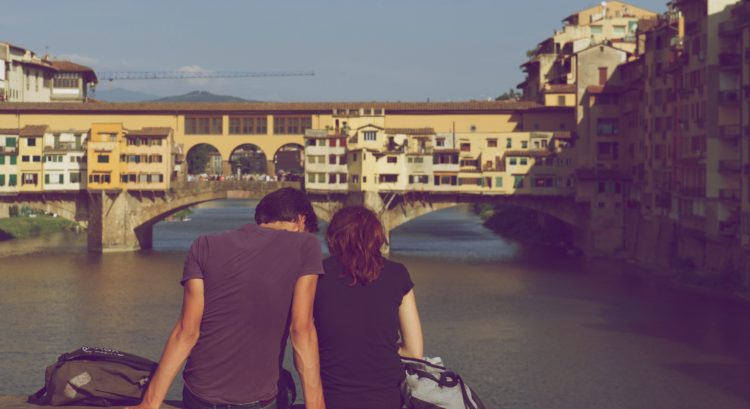
    In fact, we took every opportunity to discover someplace new, from an Italian restaurant on the other side of Nashville to Little Italy in NYC to the heart of Italy in Florence.

    We have not regretted it once.

    While I suppose we could be further down the financial road by now, we have a plethora of memories that serve as a foundation for our relationship.

    If you can travel early in your marriage, do it.

    What about starting a job? What about a college fund for our kids that do not exist yet? What about…
    Fear is a natural response to granted permission. Pay attention to fear, but do not let it get in the way. Let fear lead you toward wisdom and new courage and new dreams.

    Here are 11 reasons to travel together early in your marriage:

    • Getting away becomes more difficult once you have children. You don’t believe me? Share an itinerary for an extravagant trip with young parents. The look of envy on their faces while they dispose of dirty diapers will convince you.
    • Traveling creates new categories. We do not know what we do not know. Exploration into new places produces new pockets of space within us to understand new things—about ourselves, our spouse, God, and the world.
    • New experiences create windows into each other’s personalities that you would not otherwise see. How will your spouse respond to . . . determining which train to take when neither of you speak Polish? Or sleeping in 90+ degree heat with the windows shut to keep mosquitoes out in a room without AC on the Italian Riviera? Or how to respond when your luggage gets lost in Prague and he/she is forced to wear your biker shorts for a few days? (My wife learned much about me from all three debacles.)
    • Dream a new dream: New experiences inspire new desires. Traveling is about expanding yourself as much as seeing the world. You may return an artist. Your spouse may develop a passion to cook. Or the poverty of a place may break your collective heart and motivate you to spend your lives with a new mission.
    • Traveling will bring up conflict, and this will give you the chance to work through it together in a low-stakes setting. You will not be able to call your sister. Your spouse won’t be able to run back to his/her parents’ house to spend the night. It will be just the two of you with nothing but time to work out your competing desires. And that is a great opportunity.
    • Memories are best cemented and articulated through the five senses of smell, taste, touch, sound, and sight. Travel involves all five. An ocean breeze and suntan lotion. A pizza margarita. The smooth, wet skin of a dolphin. The splash of water against your gondola. A Broadway show. These memories will become foundation markers for the two of you to look back on and smile, laugh, and reminisce.
    • Learn to rest and heal together. Do you know the ways you and your spouse best rest? Learn together. Sink your feet into the sand at the ocean’s edge. Listen to the water dancing over the rocks by a mountain stream. Or collapse onto the bed together after a 12 hour tour.
    • It is okay to be lost. With a map, a GPS, and even a husband, you cannot travel without losing your way at some point. This will not be the last time the two of you will be lost in marriage. Asking for directions on a Tokyo subway is not that different than asking for help on your marriage. Why not learn a certain level of healthy shame and helplessness in a cool foreign city?
    • All you need is love. Try to feel hungry while you sit with impoverished children. Try to dream about upgrading your home while you see a family of seven sharing a dirt-floored house where the living room is also the bedroom, bathroom, and kitchen. Exposure to the world and balancing a travel budget will show you and your spouse that you need very little to live.
    • The world does not revolve around you. You are no longer the main character in the movie of life when you step into a foreign country. People rush off to work. Taxis maneuver through traffic and honk their horns. No one cares about your agenda. Life happens whether you are there or not. Such an experience will only help you and your spouse become more others-centered as a couple.
    • Adventure is a breeding ground for romance and intimacy. The routine of daily life can rock your marriage to sleep. Exploration of a new city or country may be the caffeine you need to see and appreciate your spouse in a new light.
  • Recovering Story as a Family

    Recovering Story as a Family

    “What are these fundamental principles, if they are not atoms?”
    “Stories. And they give me hope.” ― Neil Gaiman

    Recently my family has been gathering earlier and earlier for bedtime. The lights still go out at the same time, but we start the getting ready process earlier-

    “Can we read Magician’s Nephew tonight? Do we have time?”

    Funny enough, you may have read those words as your mind speaks a child’s voice. Most nights, those words belong to my wife and me. Our kids join in the hope, too. How many chapters can we fit in before we fall asleep?

    I lay on my side angled toward the lamp with the book in hand. One girl sits against my legs and another leans against my back. A few paragraphs in, she climbs over and onto my shoulders to get a better view of the pages. My wife sits nearby, blissfully unbothered by the weights of curiosity. I know I will be sore by chapters end, but nonetheless, I begin.

    “This is a story about something that happened long ago when your grandfather was a child.”
    Time passes but no one knows it.
    “Exactly as he spoke, Polly’s hand went out to touch one of the rings. And immediately, without a flash or a noise or a warning of any sort, there was no Polly. Digory and his uncle were alone in the room.”

    I close the book at the end of the chapter and look up to see hungry eyes on me. “Please one more chapter, Daddy. Just one.”

    One girl wrestles the book from me and flips to the last pages. She wants to know how it ends.

    This has been our routine. And when the events of the day derail our plans to read, we sadly look at the book on the shelf and anticipate the next time we can open up ourselves up to story.

    Most of the time we parents use story as a means to get a break from our kids. “Can we watch a show?” the kids cry. Yes, please. 30 minutes. An hour. How about a longer movie? Anything to give me a break from the whining, fussing, and fighting.

    Our recent family evenings have nothing to do with distraction, though. We discovered a hunger for story. If the human body survives on food, water, and shelter, the human heart lives on story.

    I’m ashamed to say I needed the reminder. I gave much of myself to athletics in my youth. As a dad, it’s been one of the greatest surprises to learn my kids, too, love to dribble, throw, and win. In the madness of practices, games, and making sure everyone has water bottles and the right gear, I fell into old habits: Living and breathing sports to the neglect of something my heart (and kids) needed very badly: Story.

    “Creatures, I give you yourselves,” said the strong, happy voice of Aslan.

    Now ten chapters in, I have to hide the book each night so the girls don’t peak ahead. What a beautiful and necessary reminder of our soul’s appetite for Story.

    Indeed a deeper wisdom seeks out Story. We want more than entertainment. More so we look for something eternal when we pile onto the bed as a family. We gather each night, before and with story, in great anticipation.

    Together…

    • We are looking for home.
    • We bring our slumbering hearts that only a good story can awaken.
    • We bring our disconnection and burdens in search of hope.
    • We read to remember that our life, too, is a story. It is going somewhere. It has a plot and a point. It matters. And so we matter.
    • Story reminds us to live in anticipation rather than expectation.
    • We are looking for our selves. So we read to remember who we are, because you and I forget. Often.
    • And we bring our existential questions: Will this story end well? Will our story end well?
    • Together we enter story with earnest hopes of entering Story.

    As Lewis so wisely reminds adults, “Someday you will be old enough to start reading fairy tales again.”

    Like the air we inhale and the food we eat, we breathe in and feed our heart with story. Because in the madness and craziness of life where truth seems lost or hidden at best, story reminds us and puts us in touch with truth again.

    How might you pursue story and Story as a means to watching over your heart?

  • Am I a Man?

    Am I a Man?

    Am I a man?

    Somehow boyhood failed to answer this question for us men.

    You’d think with all that formal schooling, a man would know by the time he grabs his diploma and trots off stage. But the question, lodged deep down in the musty, dark, abandoned basement of the soul, rides along inside a man to the fraternity house, dorm room, or first day on a real job.

    Am I a man?

    The worst part about it all is this: Most men have no idea we even carry the question.

    And without awareness, all hell breaks loose. Really. He creates hell on earth when he takes his question to work, friends, dating, his marriage, and success. When his question goes unanswered, relational chaos ensues.

    Scary too that when he lives blind to his heart, he can go decades before the destruction surfaces.

    Then life falls apart- his wife brings up the idea of separation; his boss delivers a rough annual review; he finds marijuana in his son’s gym bag- This disruption offers his heart four options:

    1) Rage
    2) Hide
    3) Numb
    4) Surrender and Journey Deeper

    In the wreckage and rubble, “Am I a man?” waits beneath a gateway question: Will I stop to process how my search for identity intersects with my tragedy?

    It does, because the search and question of identity shadows a man always.

    The question must be answered. It won’t go away. He cannot outrun it. Like our thirst on a hot-muggy-I don’t want to go outside-summer day in the South, the question screams for attention. When he takes it to the wrong places, the wrong places leave him empty. Success, productivity, power, and a tryst with a trophy woman offer a shot glass of water. But the thirst returns. He wakes up the next morning to live in fear again.

    Am I a man?

    Probably not.

    I should get someone else to tell me otherwise.

    Because denial, prosperity, and fantasy will not destroy his question, he must do something different with it.

    Up to this point, a man has asked his question to the wrong places, so repentance becomes step one.

    He must do the last thing he would ever think of: He must own the question for himself; he must take it back.

    He must take his question back from the woman, his job, his bank account, and anywhere else he has handed over his report card and demanded an A+.

    Once he owns responsibility for the question, he must take it to proper places.

    To the mirror. To a campfire of other men. To the wildness and kindness of God. Not always in that order, either, but certainly he needs all three. Sometimes God’s response only sounds like the wind. Other men can offer their hearts, but each man is limited to his own story. And all by himself, a man is just lonely. So he needs the intimate community of all three.

    Likely he’ll need time to build relationship with each before any change occurs. That’s okay. He has a lifetime to excavate and unearth.

    Am I a man?

    I don’t know, but I want to find out.

    Lord, show me a better way to discover.

  • Rough Waters Ahead

    Rough Waters Ahead

    “At the time I did not know that stories of life are often more like rivers than books.”
    ― Norman Maclean

    The last time Colorado graced me with its presence, my family decided to take a float trip down the San Juan River. There were other options, of course. One site advertised everything from a calm float trip with less than twenty paddles to a Class 4 and 5 rapid, “Advanced” option. Characteristics in the latter included: 1- Continuous paddling in uninterrupted white water, 2- Very good physical fitness required, and 3- You might die.

    Okay, they didn’t mention that last one until the fine print paperwork.

    For a family with four year olds? We chose to float a few miles peacefully without even the faintest danger. I still have an iPad wall paper image of my daughter laid out across my legs, her hat barely hanging onto her head, as I steered us in a one-man inflatable kayak.

    The most exciting moment of the day came when my daughter turned our meandering journey into an Olympic race: We in our highly maneuverable and agile kayak versus them, in their 10-person monster raft whose weighted down base came inches from the bottom of the river.

    Safe to say, we won.

    Actually “Safe to say” describes our trip. It was safe. And I’m glad for that, especially with young kids. But the wilder part of me wondered: Could I have handled the advanced excursion? I wouldn’t find out that day.

    If we pay attention, our life is a mixture of rough waters and float trips. In unpredictable moments, life chooses our terrain for us, and we navigate the rocks and rapids on the fly. More often, though, we have more say in the type of waters we travel.

    I don’t wake up each morning hoping to be thrown from my raft and pulled under by a class five rapid. But it would do us well to take an introspective look at how we approach our trip down life’s river. Until we discover the parts of of us which yearn for rough waters, we live unsettled, disconnected, and in fear of desire. And this means one thing: We lose heart as we float the river of complacency.

    Do you earnestly seek out calm, easy streams? Or do you initiate pursuit toward the rough waters, knowing the risk will resurrect and unearth the foreign yet familiar voice which calls to you from within?

    This voice yearns for more than just adventure. It beckons us on the journey toward remembering, recovering, and becoming. Unfortunately float trips rarely produce this transformation.

    But when the voice of our heart cries out louder than the roar of the rapids, we know we are ready for this journey toward more.

  • 62% Faith

    62% Faith

    How would you wait out a death sentence?

    Back in the early days of the church, the book of Acts tells us that Peter’s friend James had just been killed by Herod Agrippa I, yet another Herod on a murderous rampage. The people cheered, which only further motivated Herod in his killing spree. Peter was next. Herod had him arrested and thrown in jail. He took no chances- he ordered sixteen guards to watch over him.

    Where you or I might shake and lie awake in panic, Peter slept. Seriously. The Message puts it like this: “Then the time came for Herod to bring him out for the kill. That night, even though shackled to two soldiers, one on either side, Peter slept like a baby.”

    Well-churched people often live with the idea that faith looks a certain way, and thus, successful faith means adapting my behavior to meet a standard. We hear this story about Peter and think, When times get hard, faith looks like Peter.

    A man loses his job and feels the pressure to accept his circumstances with the faith that proclaims: God will provide!

    A mother discovers she needs surgery for the very cancer that took her mother and believes she must manage her emotions: I must show my friends God is in control.

    When it comes to faith, we need permission rather than a mold. Don’t do faith like Peter. Do faith like You.

    If that means 62% faith, own it and move forward with it. Maybe a year from now 62% becomes 63.5% and you have that much more of a relationship to enjoy and story to tell. Peter has a different story- a marvelous and glorious tale of redemption, failure, and restoration. But so do you. The best you can do is discover faith based out of your story, not another’s.

    Somewhere we lost vision for living in the present. Instead, we substituted the need to fit our response and reaction to the tragedies of life into a godly mold. I get it, a little. Take the fruits of the Spirit- love, joy, peace, forbearance, kindness, goodness, faithfulness, gentleness, and self-control. When hard times come, shame tells us: My life should reflect these attributes.

    I agree. I want to fully embody all nine of them, too.

    But none of us have arrived yet. Therefore, we must recover the desire to tell the truth about what is real.

    We hurt. We fear. We doubt.

    If we have faith, we can still have doubt.

    I think God values our doubt because doubt plays a role on the journey toward intimacy.

    When I met my wife, I did not know she was the one. In fact, it took me at least a year to even notice her. We were driving along and I looked over and saw her for the first time. The idea of a relationship became a possibility. There was much reason to doubt- for one, she was nine years older than me. But interacting with her also became a way to engage the doubt.

    With doubt comes the invitation for relationship, albeit one with struggles.

    But what relationship exists without struggle?

    When we live with an idea of how we should respond to life, we lose the truth of who and where we are. And when we lose the truth of ourselves, we have nothing left of ourselves to offer anyone.

    Where I am is always much different than where I think I should be.

    When life gets hard, by all means, have a desire to respond with 100% faith and trust. But can we find the awareness to hit pause before the shame seeps in to blame us for falling short of Christ-like faith?

    You are where you are. If you’re at 62% faith, start there.

    But that’s 38% doubt, you say.

    Yes, yes it is. And doubt becomes a beautiful invitation for honest relating in reality.

    Frederick Buechner says it this way, “Doubts prove that we are in touch with reality, with the things that threaten faith as well as with things that nourish it. If we are not in touch with reality, then our faith is apt to be blind, fragile, and irrelevant.”

    Doubt is the beginning of a story, not the end. Doubt leads us into reality, and reality is where real relationship happens and grows. I want to be like fiery and passionate Peter, but deep down I keep an eye on Thomas. I’m grateful for him because Thomas gives me permission to ask to see Jesus’ scars. Over and over again. Day after day.

    May we grant ourselves the grace to feel what is true, tell what is true, and find God and intimacy in the process.